Sign In

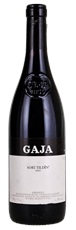
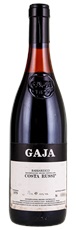
2020 Gaja Barolo Conteisa

Lightly depressed cork

Removed from a professional wine storage facility

Ends Sunday, 7pm Pacific
Have a 2020 Gaja Barolo Conteisa to sell?
Get a Free Estimate

RATINGS

98James Suckling

It’s medium- to full-bodied with rounded tannins and a savory finish.

97The Wine Advocate

...vibrant notes of wild cherry, crushed mint, dusty limestone and pressed violets...tannins are especially elegant and fine.

97Jeb Dunnuck

...ripe and expressive with pristine notes of strawberry preserve, balsamic herbs, candied flowers, and sweet tobacco. It offers a lot of ripe sapidity on the palate, with a resinous quality, a touch of warmth, a rounded feel, and great length.

95Wine Enthusiast

...captivating aromas of cherries and ripe strawberries that intermingle with savory aromas of dried herbs and a touch of earthiness...palate unveils a medley of baked cranberries and stewed spiced plums, complemented by sweet and savory spices.

94Wine Spectator

This spicy, cherry-scented red offers a lacy texture and elegant profile, with cherry, strawberry, eucalyptus, anise, iron and wild herb flavors driven by bracing acidity. Balanced overall, extending on the resonant finish.

PRODUCER

Gaja

Angelo Gaja’s wines are among the most distinctive in Italy, and as a businessman and winemaker, family patriarch Angelo Gaja has always been ahead of trends. A fourth-generation wine producer based in Piedmont, Gaja began advocating modern methods to improve the quality of Italian wines more than three decades ago, a time when most Italian producers were determined to simply make as much wine as possible, regardless of its quality. Like Robert Mondavi in Napa Valley, Gaja wanted his wines to be in the same league as the best wines of France. And after his careful attention to quality beginning in the 1970s, his single vineyard Barbarescos earned international attention. By dropping appellations from his labels, he was also able to create blends, which are essentially Barbarescos or Barolos with very small amounts of Barbera added. Gaja’s most famous wines are his single vineyard Barbarescos. The winery has 250 acres in vineyards.

REGION

Italy, Piedmont, Barolo

Barolo is one of Italy’s greatest wine appellations. In fact many cognoscenti of Italian wines consider Barolo to be the apex of Italian winemaking. Barolo is sometimes referred to as “the king of wines, and the wine of kings” partly because until the mid-19th century Piedmont was owned by the noble House of Savoy, the historic rulers of northwestern Italy. And the Savoys had a taste for Nebbiolo. Nestled into the rolling hills of Langhe, the Barolo DOCG includes 11 communes, one of which is the town of Barolo. There are 4,200 vineyard acres in the appellation and since the late 19th century growers have tried to identify their best vineyards. By marketing some vineyards as better quality than others, Barolo producers have followed the Burgundian custom of making single vineyard, or “cru” vineyard bottlings. As in neighboring Barbaresco, the Barolo DOCG requires that wines be 100% Nebbiolo, a grape thought of as the Pinot Noir of Italy. Records show that Nebbiolo was grown in the Piedmont as early as the 14th century, and despite being somewhat finicky – it is late to ripen and easily damaged by adverse weather --- Nebbiolo makes highly aromatic and powerful red wines. Until the mid-19th century Nebbiolos of Piedmont were vinified as sweet wines, though that ended in the late 19th century when a French oenologist was invited to Piedmont to show producers how to make dry reds. Barolo was made a DOC in 1966 and upgraded to DOCG status in 1980. Barolos must be aged at least three years, at least two of those years in wood. Barolos are tannic and robust and generally need at least five years to soften into complex, earthy wines.

TYPE

Red Wine, Nebbiolo, D.O.C.G.

This red grape is most often associated with Piedmont, where it becomes DOCG Barolo and Barbaresco, among others. Its name comes from Italian for “fog,” which descends over the region at harvest. The fruit also gains a foggy white veil when mature.

VINTAGE

2020 Gaja Barolo Conteisa