Sign In

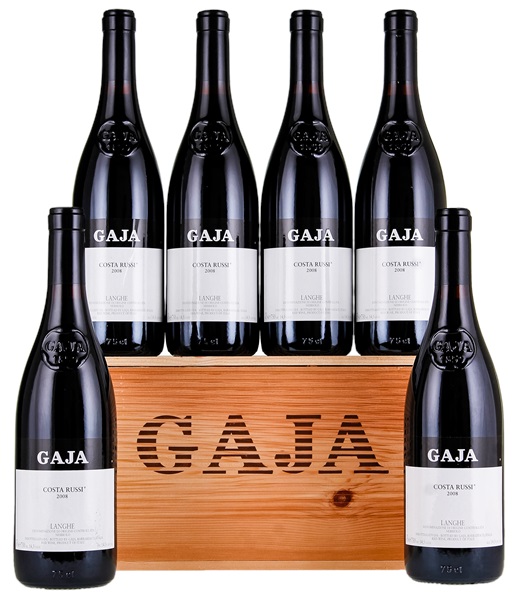
2008 Gaja Langhe Costa Russi

6-bottle Lot, Wood Case

See item details for bottle notes

Minimum Bid is $1,600
(Ships separately, charges apply)
Ends Sunday, 7pm Pacific

ITEM 10533316 - Removed from a professional wine storage facility; Purchased from a private collector

Bidder Amount Total
$1,600
2008 Gaja Langhe Costa Russi
Front Item Photo

2008 Gaja Langhe Costa Russi

RATINGS

94The Wine Advocate

Gorgeous. Sweet dark cherries, tar, licorice and new leather are some of the aromas and flavors that take shape in the glass. ..finish shows terrific intensity. The typical juiciness of the site is framed by the firm tannins

94+ Stephen Tanzer

Reticent nose hints at strawberry, raspberry, mocha and smoke. Fresh and nicely delineated, with silky-sweet flavors of dark raspberry and spices. Intensely flavored wine with a captivating sugar/acid balance.

94James Suckling

Blackberries and flowers on the nose follow through to a full body, with chewy tannins and a round texture. All in finesse and length.

93Wine Spectator

Deep and rich, this red is fresh and vibrant, displaying mint, cherry, licorice and spice flavors. Framed in oak, both spice and tannins, with a taut structure and fine length.

PRODUCER

Gaja

Angelo Gaja’s wines are among the most distinctive in Italy, and as a businessman and winemaker, family patriarch Angelo Gaja has always been ahead of trends. A fourth-generation wine producer based in Piedmont, Gaja began advocating modern methods to improve the quality of Italian wines more than three decades ago, a time when most Italian producers were determined to simply make as much wine as possible, regardless of its quality. Like Robert Mondavi in Napa Valley, Gaja wanted his wines to be in the same league as the best wines of France. And after his careful attention to quality beginning in the 1970s, his single vineyard Barbarescos earned international attention. By dropping appellations from his labels, he was also able to create blends, which are essentially Barbarescos or Barolos with very small amounts of Barbera added. Gaja’s most famous wines are his single vineyard Barbarescos. The winery has 250 acres in vineyards.

REGION

Italy, Piedmont, Langhe

Piedmont’s name means “foot of the mountain” and it aptly describes Piedmont’s location near the Alps, just east of France and south of Switzerland. For admirers of Nebbiolo wines, Piedmont is Italy’s most exalted region, since it is home to Barolo and Barbaresco. Barolo and Barbaresco are names of towns as well as names of the two most prestigious Piedmont DOCGs. Piedmont, with 142,000 vineyard acres, has seven DOCGs and fifty DOCs, the highest number of DOCS in any Italian wine zone. Despite its relatively northern location, its sometimes cool and frequently foggy weather, Piedmont produces mostly red wines. The Nebbiolo grape thrives in this climate and in fact takes its name from the Italian word for fog, “nebbia.” With its rich buttery food, majestic red wines and complicated vineyard system, Piedmont is often thought of as the Burgundy of Italy. As in Burgundy, Piedmont vineyards generally have well-established boundaries, and the vineyards are often divided into smaller parcels owned by several families. Though Nebbiolo is considered the most “noble” Piedmont grape, Barbera is actually the most widely planted grape. Dolcetto is the third most common red grape. White wines in Piedmont are made from Arneis, Cortese, Erbaluce and Moscato. Though Barolo and Barbaresco are the stars of the region, the easy-to-drink, sparkling “spumante” and “frizzante” wines of the Asti DOCG are the most widely produced. There are also Piedmont Indicazione Geographica Tipica (IGT) wines that are often an innovative blend of traditional and non-traditional grapes. This relatively new appellation status was started in 1992 as an attempt to give an official classification to Italy’s newer blends that do fit the strict requirements of DOC and DOCG classifications. IGT wines may use the name of the region and varietal on their label or in their name.

TYPE

Red Wine, Nebbiolo, D.O.C.

This red grape is most often associated with Piedmont, where it becomes DOCG Barolo and Barbaresco, among others. Its name comes from Italian for “fog,” which descends over the region at harvest. The fruit also gains a foggy white veil when mature.

VINTAGE

2008 Gaja Langhe Costa Russi

With the 1996 vintage, this wine dropped the Barbaresco designation.

Front Item Photo

2008 Gaja Langhe Costa Russi

Light label condition issue

RATINGS

94The Wine Advocate

Gorgeous. Sweet dark cherries, tar, licorice and new leather are some of the aromas and flavors that take shape in the glass. ..finish shows terrific intensity. The typical juiciness of the site is framed by the firm tannins

94+ Stephen Tanzer

Reticent nose hints at strawberry, raspberry, mocha and smoke. Fresh and nicely delineated, with silky-sweet flavors of dark raspberry and spices. Intensely flavored wine with a captivating sugar/acid balance.

94James Suckling

Blackberries and flowers on the nose follow through to a full body, with chewy tannins and a round texture. All in finesse and length.

93Wine Spectator

Deep and rich, this red is fresh and vibrant, displaying mint, cherry, licorice and spice flavors. Framed in oak, both spice and tannins, with a taut structure and fine length.

PRODUCER

Gaja

Angelo Gaja’s wines are among the most distinctive in Italy, and as a businessman and winemaker, family patriarch Angelo Gaja has always been ahead of trends. A fourth-generation wine producer based in Piedmont, Gaja began advocating modern methods to improve the quality of Italian wines more than three decades ago, a time when most Italian producers were determined to simply make as much wine as possible, regardless of its quality. Like Robert Mondavi in Napa Valley, Gaja wanted his wines to be in the same league as the best wines of France. And after his careful attention to quality beginning in the 1970s, his single vineyard Barbarescos earned international attention. By dropping appellations from his labels, he was also able to create blends, which are essentially Barbarescos or Barolos with very small amounts of Barbera added. Gaja’s most famous wines are his single vineyard Barbarescos. The winery has 250 acres in vineyards.

REGION

Italy, Piedmont, Langhe

Piedmont’s name means “foot of the mountain” and it aptly describes Piedmont’s location near the Alps, just east of France and south of Switzerland. For admirers of Nebbiolo wines, Piedmont is Italy’s most exalted region, since it is home to Barolo and Barbaresco. Barolo and Barbaresco are names of towns as well as names of the two most prestigious Piedmont DOCGs. Piedmont, with 142,000 vineyard acres, has seven DOCGs and fifty DOCs, the highest number of DOCS in any Italian wine zone. Despite its relatively northern location, its sometimes cool and frequently foggy weather, Piedmont produces mostly red wines. The Nebbiolo grape thrives in this climate and in fact takes its name from the Italian word for fog, “nebbia.” With its rich buttery food, majestic red wines and complicated vineyard system, Piedmont is often thought of as the Burgundy of Italy. As in Burgundy, Piedmont vineyards generally have well-established boundaries, and the vineyards are often divided into smaller parcels owned by several families. Though Nebbiolo is considered the most “noble” Piedmont grape, Barbera is actually the most widely planted grape. Dolcetto is the third most common red grape. White wines in Piedmont are made from Arneis, Cortese, Erbaluce and Moscato. Though Barolo and Barbaresco are the stars of the region, the easy-to-drink, sparkling “spumante” and “frizzante” wines of the Asti DOCG are the most widely produced. There are also Piedmont Indicazione Geographica Tipica (IGT) wines that are often an innovative blend of traditional and non-traditional grapes. This relatively new appellation status was started in 1992 as an attempt to give an official classification to Italy’s newer blends that do fit the strict requirements of DOC and DOCG classifications. IGT wines may use the name of the region and varietal on their label or in their name.

TYPE

Red Wine, Nebbiolo, D.O.C.

This red grape is most often associated with Piedmont, where it becomes DOCG Barolo and Barbaresco, among others. Its name comes from Italian for “fog,” which descends over the region at harvest. The fruit also gains a foggy white veil when mature.

VINTAGE

2008 Gaja Langhe Costa Russi

With the 1996 vintage, this wine dropped the Barbaresco designation.