Sign In

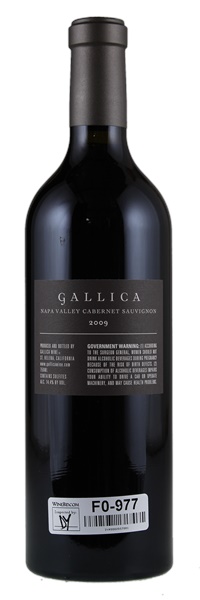
2009 Gallica Cabernet Sauvignon

Removed from a professional wine storage facility; Purchased direct from winery

4 available
Bid *
Ends Sunday, 7pm Pacific

RATINGS

95+ The Wine Advocate

...big, plush wine. Despite its initial richness, there is plenty of underlying tannin. Sweet floral notes are woven throughout. The 2009 bursts with energy, precision and sheer class. It is a dazzling effort...

94Wine Spectator

A powerful wine, dense and concentrated, weaving a mix of cedary oak, loamy earth, dried berry and black licorice, with a dash of mocha powder and crushed rock, ending with rich, chewy tannins.

92+ Stephen Tanzer

...juicy and vibrant in the mouth, with lovely definition and floral lift to the youthfully medicinal flavors of black cherry, tar & dark chocolate. Finishes with a serious spine of dusty tannins and lingering notes of truffle and spices.

PRODUCER

Gallica

Gallica is an artisanal winemaking project founded, owned and operated by Rosemary Cakebread, one of Napa Valley’s most admired winemakers. Cakebread started her career at Inglenook, then worked briefly in Bordeaux before spending 16 years as winemaker and consulting winemaker at Spottswoode Estate Vineyard. In 2007 she offered her first vintage of Gallica, a Cabernet Sauvignon blended with small amounts of Cabernet Franc and Petit Verdot. Cakebread sources her grapes from growers committed to organic farming and sustainable practices. Gallica refers to the botanical name rosa gallica, a family of sturdy roses admired since antiquity for their fragrance and medicinal qualities. Cakebread also produces Suzuri, a Rhone style blend of Grenache, Mourvedre, Syrah Noir and Viognier. Wine Advocate’s reviewer has rated Gallica in the mid-90s and called it “one of my favorite emerging wineries.”

REGION

United States, California, Napa Valley

Napa Valley AVA is the most famous winemaking region in the United States and one of the most prestigious in the world. With nearly 43,000 acres of vineyards and more than 300 wineries, it is the heart of fine wine production in the United States. Winemaking started in Napa in 1838 when George C. Yount planted grapes and began producing wine commercially. Other winemaking pioneers followed in the late 19th century, including the founders of Charles Krug, Schramsberg, Inglenook and Beaulieu Vineyards. An infestation of phylloxera, an insect that attacks vine roots, and the onset of Prohibition nearly wiped out the nascent Napa wine industry in the early 20th century. But by the late 1950s and early 1960s Robert Mondavi and other visionaries were producing quality wines easily distinguishable from the mass-produced jug wines made in California’s Central Valley. Napa Valley’s AVA was established in 1983, and today there are 16 sub-appellations within the Napa Valley AVA. Many grapes grow well in Napa’s Mediterranean climate, but the region is best known for Cabernet Sauvignon. Chardonnay is also very successfully cultivated, and about 30% of the AVA’s acreage is planted to white grapes, with the majority of those grapes being Chardonnay,

TYPE

Red Wine, Cabernet Sauvignon

One of the most widely grown grape varieties, it can be found in nearly every wine growing region. A cross between Cabernet Franc and Sauvignon Blanc. It’s a hardy vine that produces a full-bodied wine with high tannins and great aging potential.

VINTAGE

2009 Gallica Cabernet Sauvignon