Sign In

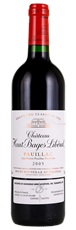
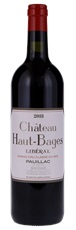
2022 Château Haut-Bages-Liberal

Removed from a temperature and humidity controlled wine storage unit

Ends Sunday, 7pm Pacific

RATINGS

96Jeb Dunnuck

...spicy, complex, nuanced Pauillac that has both red and black currants, textbook notes of freshly sharpened pencils, leather, and flowers, medium to full body, a ripe, pure, layered mouthfeel, and remarkable length on the finish. It's beautifully done and well worth seeking out...

95Vinous / IWC

...very attractive blackberry and bilberry scents... ...palate is medium-bodied with fine-boned tannins and cedar, cracked black pepper and saline notes toward the controlled, focused finish. What a wonderful HBL.

93The Wine Advocate

Aromas of sweet dark berries, bay leaf, violets and cigar ash... ...medium to full-bodied, lively and layered wine that's fresh and vibrant, with powdery tannins that assert themselves on the somewhat lactic finish...

PRODUCER

Château Haut-Bages-Liberal

Château Haut-Bages-Liberal gets its name from its location on a hill in Bages, a village between Pauillac and St. Julien. Liberal was the name of the family who founded the estate in the 18th century. Located in the Pauillac appellation, the estate is a Fifth Growth according to the Bordeaux classification of 1855. Located next to legendary Château Latour, Haut-Bages-Liberal owns 70 acres of vineyards planted to 80% Cabernet Sauvignon, 17% Merlot and 3% Petit Verdot. Since 1982 the estate has been owned by the owners of Chasse Spleen. Robert M. Parker Jr. has noted that “this château has regularly produced an excellent, although underestimated wine since the middle of the seventies. The vineyards were replanted in the sixties and are now approaching their maturity.”

REGION

France, Bordeaux, Pauillac

Pauillac is Bordeaux’s most famous appellation, thanks to the fact that it is home to three of the region’s fabled first-growth châteaux, Lafite-Rothschild, Mouton-Rothschild and Latour. Perched on the left bank of the Gironde River north of the city of Bordeaux, Pauillac is centered around the commune of Pauillac and includes about 3,000 acres of vineyards. The Bordeaux classification of 1855 named 18 classified growths, including the three above mentioned First Growths. Cabernet Sauvignon is the principal grape grown, followed by Merlot. The soil is mostly sandy gravel mixed with marl and iron. Robert M. Parker Jr. has written that “the textbook Pauillac would tend to have a rich, full-bodied texture, a distinctive bouquet of black currants, licorice and cedary scents, and excellent aging potential.”

VINTAGE

2022 Château Haut-Bages-Liberal