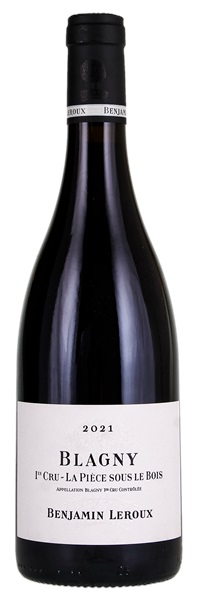
Maison Benjamin Leroux in Beaune was started in 2007 by Benjamin Leroux, one of the most admired young winemakers in Burgundy. Leroux became winemaker and manager at prestigious Domaine Comte Armand starting in 1999, when he was not yet 30, but he wanted his own label. With several investors he started his negociant business by taking over a section of the 19th century Jaboulet-Vercherre winery in Beaune. He owns and leases vineyards, and makes one monopole, Volnay Premier Cru Clos de les Caves. Since Leroux is often working with very small leased parcels, he makes several dozen wines, often ending up with a single barrel of less of particular cuvee. In 2014 he quit his job at Comte Armand. His wines earn compliments from reviewers, including a 2014 Wine Advocate review: “Suffice to say that this is a strong set of wines from a very talented winemaker…whose comprehensive portfolio spans much of Burgundy,(with each wine) translating the leitmotifs of their respective terroirs with style and panache.
Meursault is one of the trio of famous Chardonnay producing appellations in the Côte d’Or. Although both red and white wines are allowed to be produced in the Meursault appellation, 98% of Meursault is Chardonnay. With a total of 2,500 acres of vineyards, there are no Grands Crus but 325 acres of Premiers Crus, which are divided into 13 main vineyards. As wine writers have often noted, Meursault’s fame is based on its Premiers Crus, including the prestigious Les Perrières, Les Genevrières and Les Charmes. Because the water table is low in Meursault, many producers have cellars here, including Comte Lafon and Jean-Francois Coche-Dury. Robert M. Parker Jr. wrote “the Premiers Crus, as well as the finest Villages Meursaults from the top vineyards, are among the easiest drinking white burgundies in the world. Why? High-quality Meursault is opulent, almost unctuous, with a fatness and a juicy, succulent, buttery, hazelnut and apple, peach-like fruitiness that often roars from the glass.”
This red wine is relatively light and can pair with a wide variety of foods. The grape prefers cooler climates and the wine is most often associated with Burgundy, Champagne and the U.S. west coast. Regional differences make it nearly as fickle as it is flexible.

 Preferred storage and shipping partner of
 Share
Share
 Post
Post
 Tweet
Tweet
 Copy Link






 <
<
 >
> service@winebid.com
 (888) 638-8968