Sign In

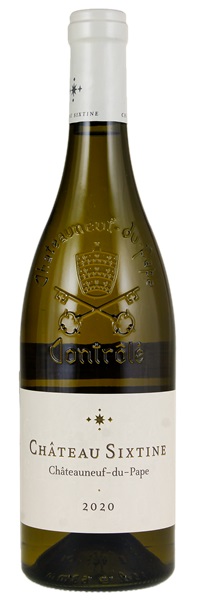
2020 Château Sixtine Châteauneuf-du-Pape Blanc

Removed from a professional wine storage facility; Purchased from a private collector

6 available
20 hours LEFT
Bid

Removed from a professional wine storage facility; Purchased from a private collector

6 available
20 hours LEFT
Bid *
Ends Sunday, 7pm Pacific

RATINGS

94Jeb Dunnuck

...beautiful honeyed pineapple, orange blossom, white flower, and spice-driven aromas and flavors...balance is spot on, it's medium-bodied, has good concentration, and integrated yet bright acidity.

93+ The Wine Advocate

...features hints of honey and caramel on the nose, accenting pear, pineapple and tangerine notes. Partially fermented and matured in oak, with about two-thirds done in tank, it's medium to full-bodied, silky and even a bit tannic, but long, balanced and ultimately harmonious.

93Wine Spectator

Plump and creamy, with white peach, melon and yellow apple notes laced with white ginger and verbena. Rich but streamlined in feel through the finish.

PRODUCER

Château Sixtine

Château Sixtine has been owned and operated by the Diffonty family since 1900, when Félicien Désiré Diffonty bought property between Orange and Avignon. The family had been farming in the region since the late 17th century. But in the 20th century they became vignerons, and today the 38-acre estate is run by Jean Marc Diffonty, great-grandson of the founder. Sixtine owns parcels in legendary vineyards, including La Crau, and grows the grapes of the Châteauneuf-du-Pape appellation: Grenache, Syrah, Mourvedre, Roussanne and Clairette. The estate’s wines frequently win awards at French wine competitions and American reviewers often rate the wines in the low to mi-90s.

REGION

France, Rhône Valley, Southern Rhône, Châteauneuf-du-Pape

Châteauneuf-du-Pape, the appellation, is a large area of nearly 8,000 vineyard acres centered around the picturesque town of Chateauneuf-du-Pape. Located in southeastern France just north of the Avignon hills, the name of the appellation means “new castle of the pope” and it is a reference to the 14th century, when the Popes of Avignon built summer homes in the Southern Rhone Valley. Today the appellation is one of the most renowned in France and its terroir is known for layers of small pebbles, called “galets.” The stones in the soil are thought to help store heat and keep the soil warm, which helps ripen the grapes. The stones also help keep the soil from drying out in hot summer months. In 1923 Châteauneuf-du-Pape was a leader in establishing the idea that AOC wines in France should be made only with specified grapes, and the appellation allowed 13 grape varieties to be used. Since then the rules have been slightly modified to include several more allowable grapes. Red and white wines are produced, though in practice about 97% of all Châteauneuf –du-Papes are reds made with a blend of Grenache Noir, Cinsault, Counoise, Mourvedre, Muscardine, Syrah and Vaccarese. The red wines of this appellation are prized for being big, rich, spicy and full-bodied. White wines of the appellation are made with Grenache Blanc, Clairette, Bourboulenc, Roussanne, Picpoul and Picardin. Whites are floral, fruity and relatively full-bodied.

VINTAGE

2020 Château Sixtine Châteauneuf-du-Pape Blanc