Sign In

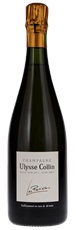
N.V. Ulysse Collin Extra Brut Le Jardin d'Ulysse

Not Currently In Auction

Latest Sale Price

December 28, 2025 - $550

Estimate

Have a N.V. Ulysse Collin Extra Brut Le Jardin d'Ulysse to sell?
Get a Free Estimate

RATINGS

97The Wine Advocate

...really fleshed out, offering up expressive aromas of orange oil, mirabelle plum, peach, buttery pasty, nutmeg, honeycomb and freshly baked bread. Full-bodied, seamless and fleshy, with racy acids and a long, chalky finish...

96+ Jeb Dunnuck

The nose is forward with wet stone, Mirabel plum, and pink peppercorn, and the wine is structured and broad on the palate, with savory herbs, pink grapefruit, and wild raspberry.

94Vinous / IWC

...Bright acids and driving minerality appears on the mid-palate and finish to give the wine its shape. Dried pear, spice, crushed flowers, chamomile and dried lemon peel all grace this savory weightless Champagne...

PRODUCER

Ulysse Collin

Champagne Ulysse Collin was started in 2003, when Olivier Collin decided to produce Champagne from his family’s 11-acre vineyard in Congy, south of Epernay. The family had long rented out the property to other growers, but Collin bought farm equipment and wine barrels and set to work. In 2004 he used the grapes from his 4-acre Les Perrières plot to make Blanc de Blancs. Starting in 2006 he also made a Blanc de Noirs from a plot called Les Maillons. He has since acquired additional vineyards, bringing his total to 21 acres. Collin ages his Champagnes in French oak barrels and adds little or no dosage. Most of his wines are single vineyard cuvées. Vinous has noted that Olivier Collin “is one of Champagne’s most promising young producers.”

REGION

France, Champagne

Champagne is a small, beautiful wine growing region northeast of Paris whose famous name is misused a million times a day. As wine enthusiasts and all French people are well aware, only sparkling wines produced in Champagne from grapes grown in Champagne can be called Champagne. Sparkling wines produced anywhere else, including in other parts of France, must be called something besides Champagne. Champagne producers are justifiably protective of their wines and the prestige associated with true Champagne. Though the region was growing grapes and making wines in ancient times, it began specializing in sparkling wine in the 17th century, when a Benedictine monk named Dom Pierre Pérignon formulated a set guidelines to improve the quality of the local sparkling wines. Despite legends to the contrary, Dom Pérignon did not “invent” sparkling wine, but his rules about aggressive pruning, small yields and multiple pressings of the grapes were widely adopted, and by the 18th and 19th centuries Champagne had become the wine of choice in fashionable courts and palaces throughout Europe. Today there are 75,000 acres of vineyards in Champagne growing Pinot Noir, Chardonnay and Pinot Meunier. Champagne’s official appellation system classifies villages as Grand Cru or Premier Cru, though there are also many excellent Champagnes that simply carry the regional appellation. Along with well-known international Champagne houses there are numerous so-called “producer Champagnes,” meaning wines made by families who, usually for several or more generations, have worked their own vineyards and produced Champagne only from their own grapes.

VINTAGE

N.V. Ulysse Collin Extra Brut Le Jardin d'Ulysse