Sign In

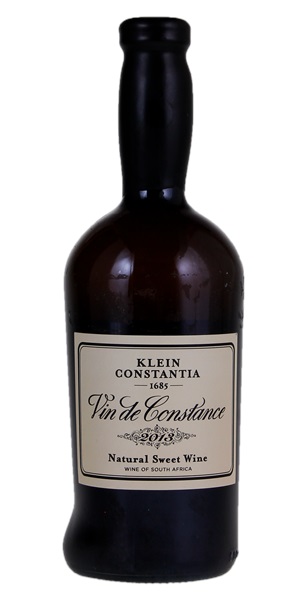
2013 Klein Constantia Vin De Constance, 500ml

Not Currently In Auction

Latest Sale Price

February 25, 2024 - $66

Estimate

RATINGS

96The Wine Advocate

...a beautiful bouquet with honey, quince, pressed yellow flowers and Mirabelle. It has wonderful definition and purity. The palate is very well balanced with a mellifluous texture and beautifully judged acidity as it just sashays along. It fans out on the finish with honey, quince, a touch of rhubarb and ginger, extraordinarily persistent in the mouth... This is awesome.

95James Suckling

Decadent and rich aromas of honey, apricot tart, treacle, caramel and dried white flowers. Very full-bodied with a dense palate of delightful fruit and wonderful sweetness. Long finish.

94Wine Spectator

Ripe and unctuous, but steely too, with mirabelle plum, apricot, kumquat and quince flavors racing along, enlivened by green tea and ginger accents through the very lengthy finish.

94Stephen Tanzer

... High-toned scents of orange marmalade, dried apricot, piercing herbs, spices, honey and marzipan. Viscous and thick...with just enough acidity to maintain its shape and energy. Supersweet dried apricot and honey flavors dominate. Finishes with a bittersweet citrus edge, a suggestion of golden raisin and palate-staining length. Wonderfully concentrated, silky wine with energy.

PRODUCER

Klein Constantia

Klein Constantia is South Africa’s oldest and most fabled wine producer. Its roots date to 1651, when Jan Van Riebeeck, a young Dutch surgeon, was sent by the Dutch East India Company to start gardens for medicinal plants that might help the company’s sailors stay healthy on their long voyages. Riebeeck included French vine cuttings in his medicinal garden, and the plants flourished in the region’s Mediterranean climate. In 1685 the region’s Dutch governor, Simon Van der Stel, claimed a huge, lush valley he named Constantia, and based on Riebeeck’s success with vineyards, Van der Stel planted 7,000 grape vines and began making sweet white wines that by the early 19th century were internationally famous. Napoleon insisted on having “les vins de Constance” during his exile, and a half a century later the wines were mentioned in literary works by Jane Austen, Charles Baudelaire and Charles Dickens. Phylloxera ended winemaking in the valley in 1865, and wine wasn’t made again until 1985, when the Jooste family purchased the estate and replanted vineyards. In 2012 Klein Constantia merged with Anwilka winery, and Klein Constantia is today owned by five private shareholders, including Zdenek Bakala and Charles Harman, both successful international businessmen. Klein Constantia makes a large portfolio of white, red, rosé and sparkling wines, but it is still most famous for its Vin De Constance, its legendary white dessert wine.

REGION

South Africa, Constantia

Constantia is South Africa’s most famous wine region. Located just south of Cape Town, grape vines were planted in Constantia in the 17th century by a Dutch surgeon who was tasked by the Dutch East India Company to grow medicinal plants. Thirty years later the local governor claimed the valley that included the medicinal gardens and vineyards, and named the valley Constantia. The governor, Simon Van der Stel, ran his own 1,850-acre estate and winery, though at his death the estate was divided and sold. Today the valley includes nearly 1,200 acres of vineyards planted to Sauvignon Blanc, the most commonly grown grape. Another 2,000 vineyard acres are planted to various grapes including Chardonnay, Cabernet Sauvignon, Semillon and Muscat. Constantia’s Mediterranean climate and granite-based soils makes for fertile vineyards, and despite the fact that the region is now essentially on the suburban edge of Cape Town, wineries continue to compete for territory. Since 2,000 several new wineries have established vineyards on the hillside slopes surrounding the valley.

VINTAGE

2013 Klein Constantia Vin De Constance