Sign In

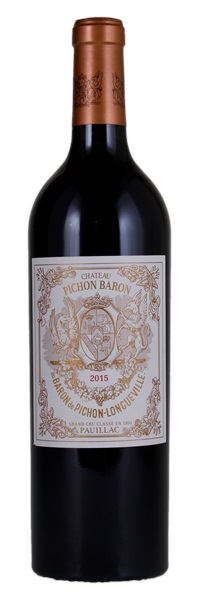
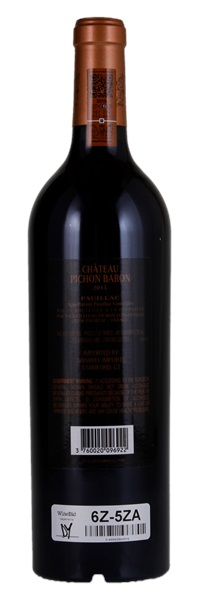
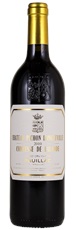
2015 Château Pichon-Longueville Baron

Light label condition issue

Removed from a subterranean wine cellar

Ends Sunday, 7pm Pacific

RATINGS

97The Wine Advocate

Chocolate-covered cherries, crushed red currants and mulberries...baking spices, potpourri and bay leaves plus a hint of fallen leaves. Sumptuously elegant, refreshing and medium-bodied with gorgeous, expressive, perfumed red fruits

97Vinous / IWC

Dense, plush and totally voluptuous... Nuanced and poised, with seemingly endless layers of nuance... super-impressive. A melange of dark red/purplish fruit, lavender, mint, spice and rose petal builds...quite simply a brilliant showing

95James Suckling

This is a muscular edition with attractive, deeply ripe blackberries and plums set amid firm and assertively linear tannins that hold the finish long and on point. Cool-fruited finish.

PRODUCER

Château Pichon-Longueville Baron

Château Pichon-Longueville Baron is a Second Growth wine of the Pauillac appellation. In the 19th century the impressive-looking chateau with multiple turrets and grand grounds was part of a larger estate that included Chateau Pichon-Longueville Comtesse de Lalande. But in 1850 the estate was divided. More than a century later Pichon-Longueville Baron was bought by the French insurance company AXA, which hired Jean-Michel Cazes of Lynch-Bages to supervise the vineyards and winemaking. The 168 acres of vineyards produce about 35,000 cases a year. The blend is usually about 70% Cabernet Sauvignon, 25% Merlot and 5% Cabernet Franc.

REGION

France, Bordeaux, Pauillac

Pauillac is Bordeaux’s most famous appellation, thanks to the fact that it is home to three of the region’s fabled first-growth châteaux, Lafite-Rothschild, Mouton-Rothschild and Latour. Perched on the left bank of the Gironde River north of the city of Bordeaux, Pauillac is centered around the commune of Pauillac and includes about 3,000 acres of vineyards. The Bordeaux classification of 1855 named 18 classified growths, including the three above mentioned First Growths. Cabernet Sauvignon is the principal grape grown, followed by Merlot. The soil is mostly sandy gravel mixed with marl and iron. Robert M. Parker Jr. has written that “the textbook Pauillac would tend to have a rich, full-bodied texture, a distinctive bouquet of black currants, licorice and cedary scents, and excellent aging potential.”

VINTAGE

2015 Château Pichon-Longueville Baron