Sign In

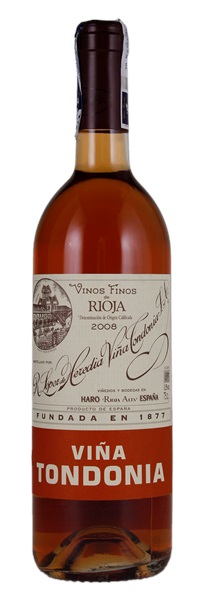
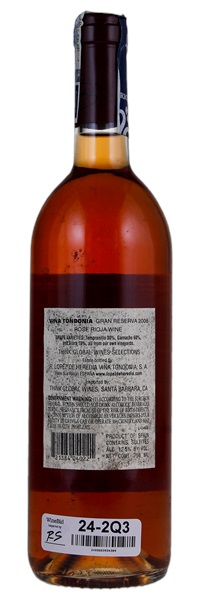
2008 Lopez de Heredia Rioja Vina Tondonia Gran Reserva Rosado

Not Currently In Auction

Latest Sale Price

November 17, 2024 - $200

Estimate

RATINGS

94The Wine Advocate

It really is a "clarete," not a rosé, as it's produced with a mixture of red and white grapes (60% Garnacha, 30% Tempranillo and 10% Viura) fermented and macerated together. It's a matured and developed rosé aged in used American oak

93Vinous / IWC

Powerfully scented bouquet evokes orange zest, red currant, rose oil, cinnamon and smoky minerals. Juicy and precise on the palate, offering intense red berry and citrus fruit flavors along with hints of honey, vanilla and candied flowers.

91Wine Spectator

This rosé shows a distinctive character, with an orange color, a firm texture and flavors of dried orange, kumquat, cocoa and tea. Balanced and harmonious, and a good match with food.

PRODUCER

Lopez de Heredia

Lopez de Heredia was founded in 1877 by Don Rafael Lopez de Heredia, a Spaniard who studied winemaking in Bordeaux. When he noticed French winemakers arriving in Rioja to plant new vineyards after theirs had been ruined by Phylloxa, Don Rafael decided to start his own winery in Haro, in Rioja. Today the estate is run by the family’s fourth generation, and it is known as one of Spain’s most venerable and consistently excellent producers. Known for its Tempranillos and red blends, the estate also makes white and rose wines. Though admired for its traditional approach to winemaking, it is worth noting that the winery’s new tasting room is a futuristic building completed in the last decade by architect Zaha Hadid, one of the world’s most celebrated and forward-thinking designers. Wine Spectator has noted that “The wines of R. Lopez de Heredia define traditional Rioja, and they set the standards by which the region’s modern reds must be judged.”

REGION

Spain, Rioja

Rioja Demoninación de Origine Calificada is Spain’s most important wine region. Located in northern Spain, it comprises 135,000 vineyard acres and was the first official appellation in Spain, earning its official DO status in 1926. In 1991 it became Spain’s first DOCa, Spain’s most prestigious appellation category. The DOCa is divided into three subzones: La Rioja Alavesa in the northeast; La Rioja Alta in the southwest; and La Rioja Baja in the east. About 75 percent of Rioja wines are reds, with Tempranillo the predominant grape. Garnacha (Grenache), Mazuelo (Carignan) and Graciano, a spicy, high-acidity red grape, are also allowed. White wines are made from Macabeo, Garnacha Blanca and Malvasia. Wines were made in this region well before the Romans arrived, though the Romans then the medieval monks refined vineyard management and wine production. In the 19th century French families migrated to Rioja after phylloxera wiped out their vineyards, and the French helped establish the tradition of wine blends, still part of Rioja winemaking. According to the rules for the appellation, a wine labelled a simple Rioja can spend less than a year in an oak aging barrel. A Criziana is aged for at least two years, one in oak. Rioja Reserva is aged at least three years, with at least one in oak. A Rioja Gran Reserva must be aged at least five years, with two years in oak.

VINTAGE

2008 Lopez de Heredia Rioja Vina Tondonia Gran Reserva Rosado