Sign In

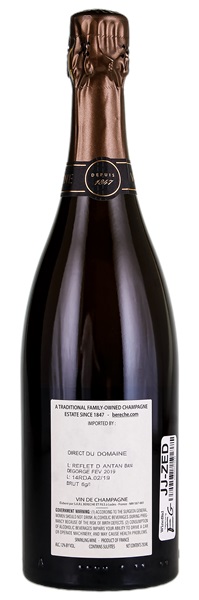
N.V. Bérêche & Fils Brut Reflet D'Antan

Disgorged 02/2019

Removed from a professional wine storage facility; Purchased from a private collector

2 available
Bid *

Disgorged 12/2019

Removed from a professional wine storage facility; Purchased from a private collector

Ends Sunday, 7pm Pacific
Have a N.V. Bérêche & Fils Brut Reflet D'Antan to sell?
Get a Free Estimate

RATINGS

96Vinous / IWC

...exquisite. Silky, aromatic and sublime...mind-blowing polish. Orchard fruit, citrus confit, spice, chamomile and a kiss of oak flesh out with time in the glass.

94The Wine Advocate

...unfurls from the glass with a kaleidoscopic bouquet of dried apricot, toasted nuts, pastries and exotic spices. On the palate, it is textural and multidimensional, with a rich, slightly oxidative character underpinned by vibrant acidity and a chalky structure. The finish is intensely saline and enduring.

94James Suckling

Very deep and rich, showing sweet-smelling nuttiness and yellow plums. Essence-like palate that’s deeply concentrated, smooth and richly textured. Super vinous with a mellow bead.

92.6CellarTracker

17.5Jancis Robinson

Very serious yet accessible. Complex...particularly intense...gingery finish.

PRODUCER

Bérêche & Fils

Bérêche & Fils is run by brothers Raphaël and Vincent Bérêche, who took over some years ago from their father Jean-Pierre. The family have been grape growers in Chigny-les-Roses, in the Reims Mountains, since 1847. They farm 23 acres divided into vineyards of Chardonnay, Pinot Noir and Pinot Meunier. Raphaël is winemaker and the estate produces about 80,000 bottles a year. The estate makes numerous Champagnes, all for their power and character, according to wine writers.

REGION

France, Champagne

Champagne is a small, beautiful wine growing region northeast of Paris whose famous name is misused a million times a day. As wine enthusiasts and all French people are well aware, only sparkling wines produced in Champagne from grapes grown in Champagne can be called Champagne. Sparkling wines produced anywhere else, including in other parts of France, must be called something besides Champagne. Champagne producers are justifiably protective of their wines and the prestige associated with true Champagne. Though the region was growing grapes and making wines in ancient times, it began specializing in sparkling wine in the 17th century, when a Benedictine monk named Dom Pierre Pérignon formulated a set guidelines to improve the quality of the local sparkling wines. Despite legends to the contrary, Dom Pérignon did not “invent” sparkling wine, but his rules about aggressive pruning, small yields and multiple pressings of the grapes were widely adopted, and by the 18th and 19th centuries Champagne had become the wine of choice in fashionable courts and palaces throughout Europe. Today there are 75,000 acres of vineyards in Champagne growing Pinot Noir, Chardonnay and Pinot Meunier. Champagne’s official appellation system classifies villages as Grand Cru or Premier Cru, though there are also many excellent Champagnes that simply carry the regional appellation. Along with well-known international Champagne houses there are numerous so-called “producer Champagnes,” meaning wines made by families who, usually for several or more generations, have worked their own vineyards and produced Champagne only from their own grapes.

VINTAGE

N.V. Bérêche & Fils Brut Reflet D'Antan