Sign In

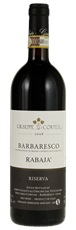
2013 Giuseppe Cortese Barbaresco Rabaja Riserva

Minimum Bid is $85
Ends Sunday, 7pm Pacific

ITEM 10619446 - Removed from a professional wine storage facility

Bidder Amount Total
$85
2013 Giuseppe Cortese Barbaresco Rabaja Riserva

RATINGS

96James Suckling

Lots of ripe fruit on the nose and palate with dried rose petals and cigar box adding complexity. Full-bodied and rich with depth of fruit and layers of ripe tannins. Smoky finish.

95Wine Spectator

...sleek, elegant style, with plenty of intensity to its floral, strawberry, currant, mineral and eucalyptus flavors.

95Vinous / IWC

...dense, brooding wine endowed with serious depth and intensity, Graphite, smoke, cured meats, spice, leather and licorice give the Riserva its decidedly sombre, virile personality.

93.6CellarTracker

94Jeb Dunnuck

It reveals vinous aromatics of leather, dried cherry, black truffle, and menthol. The palate is savory with more gripping structure, noted by tart plum, tobacco, and tar.

93The Wine Advocate

...has a rich and sweet bouquet with plum and dark cherry...bouquet reveals ripe black fruit notes that stand in contrast to background notes of sour cherry or cranberry.

93Wine Enthusiast

Aromas of underbrush, dried mint, hazelnut and prune lead the nose. The full-bodied, classically crafted palate features juicy Marasca cherry, baking spice and tobacco framed in taut, polished tannins while fresh acidity keeps it well balanced.

PRODUCER

Giuseppe Cortese

Giuseppe Cortese was established in 1971 when Giuseppe Cortese started making wine on 20 acres in the Rabaja district of the Barbaresco appellation. Today his children, Pier Carlo and Tiziana are in charge. The estate’s flagship wines its Barbaresco Rabaja’s, including a Riserva. However Giuseppe Cortese also makes Barbara d’Alba, Dolcetto d’Alba, Chardonnay and Langhe Nebbiolo. A total of 50,000 bottles are produced annually. Gambero Rosso, Italy’s leading wine journal, notes that the estate’s style “is largely traditional and based principally on the power of the magnificent Rabaja di Barbaresco cru.”

REGION

Italy, Piedmont, Barbaresco

Barbaresco is one of the two most acclaimed DOCGs in Piedmont, the other being Barolo. Located just a few miles north of Barolo, Barbaresco is a small town of fewer than 700 people and 1,680 vineyard acres, making it less than half the size of the Barolo DOCG. The other communes in this DOCG of rolling hills are Neive and Treiso. As in Barolo, the DOCG requires that Barbaresco DOCG wines be 100% Nebbiolo, a grape thought of as the Pinot Noir of Italy. Records show that Nebbiolo was grown in the Piedmont as early as the 14th century, and despite being somewhat finicky – it is late to ripen and easily damaged by adverse weather --- Nebbiolo makes highly aromatic and powerful red wines. Until the mid-19th century Nebbiolos of Piedmont were vinified as sweet wines, though that ended in the late 19th century when a French oenologist was invited to Piedmont to show producers how to make dry reds. By the late 20th century respected producers were making outstanding Nebbiolos, as well as Nebbiolo blends that do not carry the DOCG label. Barbaresco was made a DOC in 1966 and upgraded to a DCOG in 1980. DOCG Barbaresco must be aged a minimum of two years, with a minimum of one year in wood. Barbarescos are regarded as more subtle and refined than Barolos, and more approachable when young.

TYPE

Red Wine, Nebbiolo, D.O.C.G.

This red grape is most often associated with Piedmont, where it becomes DOCG Barolo and Barbaresco, among others. Its name comes from Italian for “fog,” which descends over the region at harvest. The fruit also gains a foggy white veil when mature.