Sign In

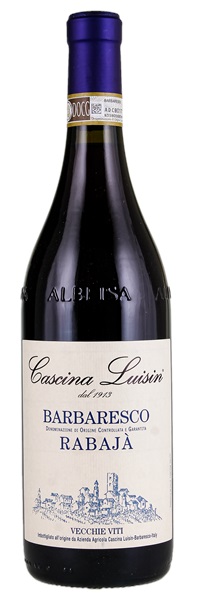
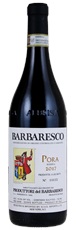
2019 Cascina Luisin Barbaresco Rabaja

Removed from a professional wine storage facility

10 available
Bid *
Ends Sunday, 7pm Pacific

RATINGS

95Wine Spectator

...high-pitched, offering strawberry, kirsch, rose hip, eucalyptus and earth flavors. Turns sweeter and slightly more viscous midpalate and through the finish despite its firm, tightly wound character. Harmonious and detailed, with a white pepper accent chiming in on the lingering aftertaste.

95Wine Enthusiast

Aromas of rose, violet and spice greet the nose along with a whiff of new leather. Savory and structured, the palate offers juicy raspberry, cherry compote and star anise accompanied by taut, fine-grained tannins and bright acidity.

94Vinous / IWC

Macerated cherry, blood orange, white pepper, spice, mint and sweet pipe tobacco build as this ample... Bracing saline notes punctuate the potent finish.

93James Suckling

The tannins in this are very fine and give a caressing mouthfeel. It’s medium-bodied with fresh fruit and citrusy undertones.

18Jancis Robinson

Iron and raspberry, complex and deep, truly exciting... Compact and conveying a sense of rich fruit, and then lashings of ripe acidity and all tied up by the fine, intense tannins. Simply gorgeous.

PRODUCER

Cascina Luisin

Cascina Luisin was founded in 1913 by Luigi Minuto, great-grandfather of the current owner, Robert Minuto. The 20-acre estate is in the prestigious Rabajà region of Barbaresco, and it produces 30,000 bottles annually. Cascina Luisin grows Nebbiolo, Barbera, Dolcetto and Arneis. Wine Advocate has complimented the estate for its “impressive work” and rated its wines in the 90s.

REGION

Italy, Piedmont, Barbaresco

Barbaresco is one of the two most acclaimed DOCGs in Piedmont, the other being Barolo. Located just a few miles north of Barolo, Barbaresco is a small town of fewer than 700 people and 1,680 vineyard acres, making it less than half the size of the Barolo DOCG. The other communes in this DOCG of rolling hills are Neive and Treiso. As in Barolo, the DOCG requires that Barbaresco DOCG wines be 100% Nebbiolo, a grape thought of as the Pinot Noir of Italy. Records show that Nebbiolo was grown in the Piedmont as early as the 14th century, and despite being somewhat finicky – it is late to ripen and easily damaged by adverse weather --- Nebbiolo makes highly aromatic and powerful red wines. Until the mid-19th century Nebbiolos of Piedmont were vinified as sweet wines, though that ended in the late 19th century when a French oenologist was invited to Piedmont to show producers how to make dry reds. By the late 20th century respected producers were making outstanding Nebbiolos, as well as Nebbiolo blends that do not carry the DOCG label. Barbaresco was made a DOC in 1966 and upgraded to a DCOG in 1980. DOCG Barbaresco must be aged a minimum of two years, with a minimum of one year in wood. Barbarescos are regarded as more subtle and refined than Barolos, and more approachable when young.

TYPE

Red Wine, Nebbiolo, D.O.C.G.

This red grape is most often associated with Piedmont, where it becomes DOCG Barolo and Barbaresco, among others. Its name comes from Italian for “fog,” which descends over the region at harvest. The fruit also gains a foggy white veil when mature.

VINTAGE

2019 Cascina Luisin Barbaresco Rabaja