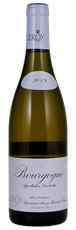
Maison Leroy is often called the greatest estate in Burgundy. Its wines are legendary, as is its history. Founded in 1868 by Francois Leroy in Vosne-Romanee, the Leroy name was associated with outstanding wine by the late 19th century. In 1942 the family purchased half of Domaine de la Romanee-Conti. Today the estate is run by the remarkable Lalou Leroy, who ran the family’s negociant business for decades before taking over winemaking in 1988. She added vineyards to the estate and today has 56 acres of prime parcels planted to Pinot Noir, Chardonnay and Aligote. About 17 of her acres are in grand cru vineyards, including Corton-Charlemagne, Corton-Renardes, Richebourg, Romanee-St. Vivant, Clos de Vougeot, Musigny, Clos de la Roche, Latricieres-Chambertin and Chambertin. Robert M. Parker Jr. has called Leroy’s wines “the reference point for Burgundy…(the wines) are among the noblest and purest expressions of Pinot Noir and Chardonnay in Burgundy.”
Santenay is the southernmost appellation in the Côte d’Or. The appellation includes the communes of Santenay and Remigny and it has 813 vineyard acres. Both red and white wines can be made within the Santenay appellation, though in practice about 85% of the wine produced here is red. Pinot Blanc may be used in white wines, though most white Santenays are 100% Chardonnay. Though there are no Grands Crus, Santenay boasts 12 Premiers Crus. Among the best Premiers Crus vineyards are Clos de Tavannes, La Comme, Les Gravières and Le Passe Temps. Robert M. Parker Jr. has written that “good Santenays share a robust, tannic, earthy character with a bouquet that suggests cherry and strawberry fruit intertwined with the smell of sautéed almonds.” Clive Coates has noted that the white wines of Santenay “should be crisp, medium-bodied and fruity, less racy but fuller than Saint-Aubins, perhaps with a touch of spice…”
This red wine is relatively light and can pair with a wide variety of foods. The grape prefers cooler climates and the wine is most often associated with Burgundy, Champagne and the U.S. west coast. Regional differences make it nearly as fickle as it is flexible.


 Preferred storage and shipping partner of
 Share
Share
 Post
Post
 Tweet
Tweet
 Copy Link




 <
<
 >
> service@winebid.com
 (888) 638-8968