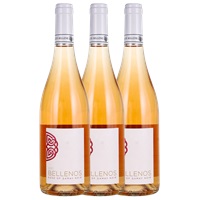
Maison Roche de Bellene is a negociant founded in 2008 by Nicolas Potel, a rising star in Burgundy and the son of the late, legendary Gerard Potel of the highly respected Domaine de la Pousse d’Or in Volnay. After his father’s death in 1997 Nicolas became a negociant and started Maison Nicolas Potel. His wines earned praise from such writers as Clive Coates, but a falling out with his business partners led to Potel’s departure from the firm that still bears his name. Ever the optimist, he bought vineyards and founded yet another negociant business and a domaine. He named his new ventures after Bellene, an ancient Gallic god of the sun. Wine Advocate wrote in 2014 that “Nicolas Potel’s wines have a strong following in the UK, the United States and Japan and for good reason. His wide portfolio of both domaine and negociant wines can be absolutely delicious…” Nicolas Potel makes wines biodynamically.
Chassagne-Montrachet is the appellation that covers the communes of Chassagne-Montrachet and Remigny, and it is the southern-most of the Côte d’Or’s three great white wine appellations of Meursault, Puligny-Montrachet and Chassagne-Montrachet. With 1,200 acres of vineyards, it is one of the largest appellations in the region, and more than half the vineyard acreage is Grand Cru or Premier Cru. The three famous Grand Crus are Le Montrachet, Bâtard-Montrachet and Criots-Bâtard-Montrachet. There are also 16 main Premiers Crus, most of them considered very high quality, and village wines. One fact rarely noted is that historically the appellation produced more red than white wine. In the late 1990s the ratio of white to red wines changed, however, as more vineyards were converted from Pinot Noir to Chardonnay, a logical decision given the acclaim of the appellation’s whites. There are still intriguing red wines produced. Clive Coates wrote that the appellation’s white wines generally are “full and firm, more akin to Puligny than to the softer, rounder wines of Meursault.”
This white variety originated in Burgundy, but is now grown around the world. Its flexibility to thrive in many regions translates to wide flavor profile in the market. Chardonnay is commonly used in making Champagne and sparkling wines.


 Preferred storage and shipping partner of
 Share
Share
 Post
Post
 Tweet
Tweet
 Copy Link




 <
<
 >
> service@winebid.com
 (888) 638-8968