Sign In

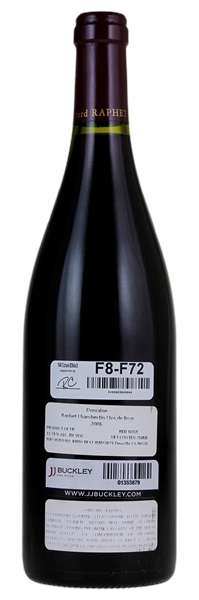
2006 Gerard Raphet Chambertin Clos de Beze

3 available
Minimum Bid Per Bottle is $200
Exceptional Collection
Ends Sunday, 7pm Pacific

ITEM 10591850 - Removed from a subterranean, temperature and humidity controlled residential cellar; Purchased upon release; Consignor is original owner

Bidder Quantity Amount Total
3 $200
2006 Gerard Raphet Chambertin Clos de Beze

RATINGS

93Wine Spectator

A blast of cherry, raspberry, mint and mineral aromas and flavors herald this focused, tensile red. It has ripe, sweet fruit, a firm structure, refinement and fine length. The finish is all spice now.

PRODUCER

Gerard Raphet

Gerard Raphet owns or leases 30 acres in Burgundy’s Cote de Nuits. He officially took over the family domaine in 2002 when his father Jean Raphet retired, although Gerard had been in charge of the vineyards for many years. The domaine includes important Grand Cru parcels in Clos de Vougeot, Charmes Chambertin, Clos de Roche, Charmes Chambertin and Clos de Beze. There are also Premier Cru parcels in Gevrey-Chambertin and Morey-Saint-Denis. Clive Coates has written that the domaine’s wines are often “rich, full, plummy and succulent. Since Gerard has been in command, the yields have been tightened up, and the proportion of new oak increased.”

REGION

France, Burgundy, Côte d'Or, Côte de Nuits, Gevrey-Chambertin, Chambertin Clos-de-Beze

Chambertin Clos-de-Beze is a Grand Cru vineyard in Gevrey-Chambertin, and its history goes back to the 7th century when it was owned by the monks of the Abbey of Beze. After the French Revolution the Catholic Church was forced to divide the vineyard among peasants. Today it is a 38-acre vineyard, making it slightly larger than Chambertin. Chambertin and Chambertin Clos-de-Beze are adjacent and share similar limestone, clay and gravel soils. Of the 18 proprietors, the largest by acreage are Pierre Damoy, 13.4 acres; Armand Rousseau, 3.5 acres; and Drouhin-Laroze, 3.48 acres.

TYPE

Red Wine, Pinot Noir, Grand Cru

This red wine is relatively light and can pair with a wide variety of foods. The grape prefers cooler climates and the wine is most often associated with Burgundy, Champagne and the U.S. west coast. Regional differences make it nearly as fickle as it is flexible.