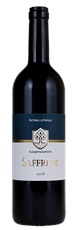
Plump and juicy, it presents attractive suggestions of super-ripe dark fruit, sweet toasted oak and minerals with outstanding length and plenty of personality.
Cassis, plum and milk chocolate on the nose, lifted by a floral perfume. Sweet, dense and youthfully unevolved, with classic cabernet flavors of dark berries, graphite, and a touch of cedar.
Le Macchiole is a 55-acre estate in Bolgheri, on the western coast of Tuscany. It was established by Eugenio Merli with his wife Cinzia. Breaking the Tuscan tradition of planting primarily Sangiovese, the Merlis planted Syrah, Cabernet Franc and Merlot. Eugenio died some years ago but Cinzia has continued to run the estate, which now also makes white wine. The flagship wine is Messorio, a Merlot. The estate also makes Cabernet Franc as well as a blend of Merlot, Cabernet Franc, Sangiovese and Syrah. The white blend is a Chardonnay and Sauvignon Blanc. Gambero Rosso, Italy’s leading wine journal, has awarded its top rating of 3 Bicchieri to numerous vintages of Messorio. The journal has written that Le Macchiole has “a very long track record of turning out top-notch wines.”
Tuscany, or Toscana in Italian, is Italy’s best-known wine region and its most diverse. Historically Sangiovese was the primary grape grown in Tuscany and Chianti was considered the purest expression of Sangiovese. Sangiovese and its many clones are still important, and they are the grapes used for the Tuscan appellations of Brunello di Montalcino, Vino Nobile di Montepulciano, Morellino di Scansano, Chianti, Chianti Classico and Carmignano. But in the last 50 years innovative producers, many of them in southwestern Tuscany in the area called Maremma, have also planted Cabernet Sauvignon, Merlot, and Cabernet Franc. The tradition defying producers have blended those varietals with Sangiovese to produce dazzling wines that do not conform to Italy’s appellation regulations. Such wines are called Super Tuscans and cannot be labeled with either of Italy’s highest level quality designations, which are in order of status Denominazione di Origine Controllata e Garantia, (DOCG), and Denominazione di Origine Controllata, (DOC). (This has not at all hindered the demand for Super Tuscans, some of which are consistently among the world’s most admired and well-reviewed wines.) Tuscany has six DOCG appellations and thirty-four DOCs. Though famous for its red wines, Tuscany also produces whites made primarily from Trebbiano and Vernaccia.
There are also many Tuscan Indicazione Geographica Tipica (IGT) wines that are often an innovative blend of traditional and non-traditional grapes. This relatively new appellation status was started in 1992 as an attempt to give an official classification to Italy’s many newer blends that do fit the strict requirements of DOC and DOCG classifications. IGT wines may use the name of the region and varietal on their label or in their name.


 Preferred storage and shipping partner of
 Share
Share
 Post
Post
 Tweet
Tweet
 Copy Link




 <
<
 >
> service@winebid.com
 (888) 638-8968