Château de Puligny-Montrachet is part of the wine producing and negociant enterprise of the de Montille family. The family has had its roots in Burgundy winemaking since the 18th century. But it was Hubert de Montille, who trained as a lawyer, who nevertheless took over the family business in the 1950s, ending the family’s centuries-long tradition of selling grapes to negociants. Hubert died several years ago and today Hubert’s children Étienne and Alix run the estate. Etienne worked during the 1990s at California wine producers. The de Montilles bought the 50-care Château de Puligny-Montrachet in 2012, primarily to produce Chardonnay. The family’s other labels include Deux Montille Soeur-Frére and Domaine de Montille.
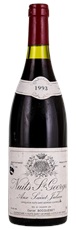
Côte de Nuits is the northern part of the Côte d’Or and it includes the most famous vineyards and wine communes in the world. There are more Grand Cru appellations in the Côte de Nuits than anywhere else in Burgundy. Of the fourteen communes, or villages in the Côte de Nuits, six produce Grand Cru wines. They are Gevrey-Chambertin, Morey-St.-Denis, Chambolle-Musigny, Vougeot, Flagey-Échezeaux and Vosne-Romanee. Some of the vineyards within the Côte de Nuits are tiny, which adds to their prestige. The fabled Grand Cru vineyard La Romanee is barely two square acres. Altogether there are twenty-four Grand Cru vineyards. The region takes its name from the village of Nuits-Saint-Georges. Côtes de Nuits produces mostly reds from Pinot Noir, and the wines have been in demand for centuries. During the 18th century King Louis XIV’s physician recommended that for his health the king only drink wines from Nuits-Saint-Georges. Like most of Burgundy, the soils of the Côte de Nuit can vary greatly from one vineyard to another, though most are a base soil of limestone mixed with clay, gravel and sand.
This red wine is relatively light and can pair with a wide variety of foods. The grape prefers cooler climates and the wine is most often associated with Burgundy, Champagne and the U.S. west coast. Regional differences make it nearly as fickle as it is flexible.


 Preferred storage and shipping partner of
 Share
Share
 Post
Post
 Tweet
Tweet
 Copy Link




 <
<
 >
> service@winebid.com
 (888) 638-8968