Sign In

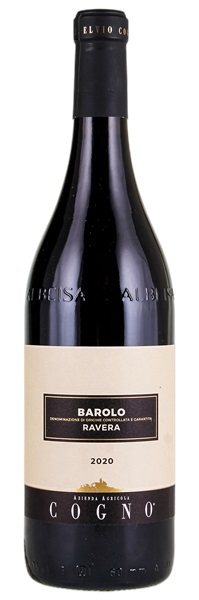
2020 Elvio Cogno Barolo Ravera

Minimum Bid is $70
Ends Sunday, 7pm Pacific

ITEM 10570276 - Removed from a temperature and humidity controlled wine cellar; Purchased at retail

Bidder Amount Total
$70
2020 Elvio Cogno Barolo Ravera

RATINGS

95The Wine Advocate

...plush and fleshed-out expression with dark fruit, dried cherry, plum, sweet iris root, earth, toast and dark spice.

95Wine Spectator

This aromatic red exudes spice and savory notes of eucalyptus, juniper, rose hip, bergamot and white pepper. Cherry, iron and tobacco flavors follow through as this tightens up on the long finish.

95James Suckling

Crushed stones, raspberries, licorice and allspice on the nose. It’s vibrant, tight and mineral with a medium to full body and firm, tight and steely tannins.

94Jeb Dunnuck

...sweet perfume of preserved strawberries, ripe peaches, candied roses, fresh herbs, and oregano. Medium-bodied, it floats on the palate with a mouthwatering feel, fine tannins, and an elegantly long finish.

93Wine Enthusiast

...nose is a captivating fusion of dark fruits, such as blackberries and plums, intertwined with an enchanting array of spices like cinnamon, clove, and anise. Herbal notes of rosemary and thyme add an intriguing layer of complexity, while a touch of medicinal character hints at the wine's classic roots. On the palate, it's tannins frame the wine in a way that lifts up each element generating a substantial experience.

17.5Jancis Robinson

Raspberry and saline, minerally notes and with aeration hints of eucalyptus. Compact and a little closed but with sensual acidity leading the cool fresh fruit. Long, deep, chewy tannins that need a couple of years to settle. Great depth of fruit on the finish.

PRODUCER

Elvio Cogno

Elvio Cogno is a 33-acre estate in the Langhe. The Cogno family history in the area dates back several centuries during which the Cognos always cultivated grapevines. By the mid-20 century the family was also running a beloved restaurant in La Morra and using their own grapes to make wine to serve at the restaurant. The wine was so popular that in the late 1950s Elvio Cogno left the restaurant business to make wine full time. He collaborated with La Marcarini winery in La Morra, and his debut commercial release was a 1961 Barolo. He went on to become one of the region’s most admired winemakers. In 1990 Cogno purchased an 18th century farmhouse and surrounding vineyards, updating both. Today the estate is run by Elvio’s daughter Nadia Cogno and her husband Valter Fissore. The estate produces Barolos and other Langhe wines that are highly praised by wine writers, including the influential Italian journal Gambero Rosso, which notes that “each wine (made at the estate) is better than the last.” Robert M. Parker Jr. has written that the estate’s wines “are consistently excellent to outstanding.” Cogno produces 80,000 bottles annually.

REGION

Italy, Piedmont, Barolo

Barolo is one of Italy’s greatest wine appellations. In fact many cognoscenti of Italian wines consider Barolo to be the apex of Italian winemaking. Barolo is sometimes referred to as “the king of wines, and the wine of kings” partly because until the mid-19th century Piedmont was owned by the noble House of Savoy, the historic rulers of northwestern Italy. And the Savoys had a taste for Nebbiolo. Nestled into the rolling hills of Langhe, the Barolo DOCG includes 11 communes, one of which is the town of Barolo. There are 4,200 vineyard acres in the appellation and since the late 19th century growers have tried to identify their best vineyards. By marketing some vineyards as better quality than others, Barolo producers have followed the Burgundian custom of making single vineyard, or “cru” vineyard bottlings. As in neighboring Barbaresco, the Barolo DOCG requires that wines be 100% Nebbiolo, a grape thought of as the Pinot Noir of Italy. Records show that Nebbiolo was grown in the Piedmont as early as the 14th century, and despite being somewhat finicky – it is late to ripen and easily damaged by adverse weather --- Nebbiolo makes highly aromatic and powerful red wines. Until the mid-19th century Nebbiolos of Piedmont were vinified as sweet wines, though that ended in the late 19th century when a French oenologist was invited to Piedmont to show producers how to make dry reds. Barolo was made a DOC in 1966 and upgraded to DOCG status in 1980. Barolos must be aged at least three years, at least two of those years in wood. Barolos are tannic and robust and generally need at least five years to soften into complex, earthy wines.

TYPE

Red Wine, Nebbiolo, D.O.C.G.

This red grape is most often associated with Piedmont, where it becomes DOCG Barolo and Barbaresco, among others. Its name comes from Italian for “fog,” which descends over the region at harvest. The fruit also gains a foggy white veil when mature.