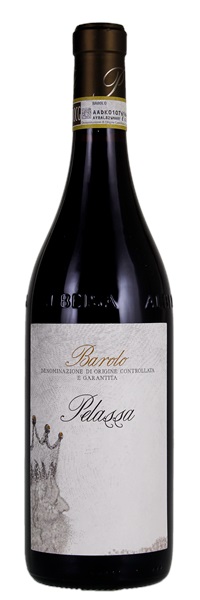
Pelassa became a commercial wine producer in 1960, when the barely 20-year-old Mario Pelassa took as many bottles of the family’s Nebbiolo as he could fit into his motorcycle panniers and drove to Turin, hoping to sell them. The family had for generations run a farm and vineyard for their own use in the town of Monta d’Alba, but Mario was the first to sell the family wine commercially. His sales mission that day in 1960 was a success, and soon the Pelassa family was in the wine business. More than 50 years later Mario still works the vineyards with his wife Maria Teresa and their sons, Davide and Daniele. Pelassa grows Nebbiolo, Barbera and Arneis, and makes about a dozen red and white wines. Their wines have won numerous awards including a Silver Medal in the 2017 Decanter World Wine Awards for the 2012 Antaniolo Roero Riserva, which also earned 92 pts from Decanter.
Barolo is one of Italy’s greatest wine appellations. In fact many cognoscenti of Italian wines consider Barolo to be the apex of Italian winemaking. Barolo is sometimes referred to as “the king of wines, and the wine of kings” partly because until the mid-19th century Piedmont was owned by the noble House of Savoy, the historic rulers of northwestern Italy. And the Savoys had a taste for Nebbiolo. Nestled into the rolling hills of Langhe, the Barolo DOCG includes 11 communes, one of which is the town of Barolo. There are 4,200 vineyard acres in the appellation and since the late 19th century growers have tried to identify their best vineyards. By marketing some vineyards as better quality than others, Barolo producers have followed the Burgundian custom of making single vineyard, or “cru” vineyard bottlings. As in neighboring Barbaresco, the Barolo DOCG requires that wines be 100% Nebbiolo, a grape thought of as the Pinot Noir of Italy. Records show that Nebbiolo was grown in the Piedmont as early as the 14th century, and despite being somewhat finicky – it is late to ripen and easily damaged by adverse weather --- Nebbiolo makes highly aromatic and powerful red wines. Until the mid-19th century Nebbiolos of Piedmont were vinified as sweet wines, though that ended in the late 19th century when a French oenologist was invited to Piedmont to show producers how to make dry reds. Barolo was made a DOC in 1966 and upgraded to DOCG status in 1980. Barolos must be aged at least three years, at least two of those years in wood. Barolos are tannic and robust and generally need at least five years to soften into complex, earthy wines.
This red grape is most often associated with Piedmont, where it becomes DOCG Barolo and Barbaresco, among others. Its name comes from Italian for “fog,” which descends over the region at harvest. The fruit also gains a foggy white veil when mature.

 Preferred storage and shipping partner of
 Share
Share
 Post
Post
 Tweet
Tweet
 Copy Link


 <
<
 >
> service@winebid.com
 (888) 638-8968