Sign In

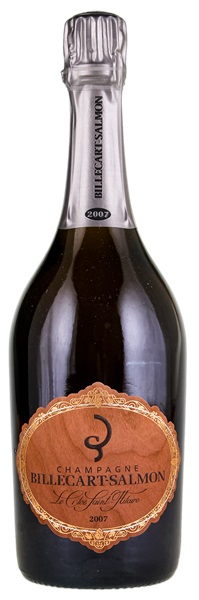
2007 Billecart-Salmon Clos St Hilaire

Light label condition issue

Removed from a professional wine storage facility

Ends Sunday, 7pm Pacific
Have a 2007 Billecart-Salmon Clos St Hilaire to sell?
Get a Free Estimate

RATINGS

98James Suckling

Beautifully complex and mineral with notes of chalk, blanched almonds, dried raspberries, rose petals, pink grapefruit, nutmeg and pink peppercorns. Complex, tight and structured, with a medium to full body, plenty of strength yet elegant. Tight bubbles. Long, firm and savory.

97Vinous / IWC

Silky and plush, with terrific depth... Kirsch, plum, dried flowers, chamomile and dried herbs build, filling out the layers effortlessly... White flowers, chalk, mint and white pepper open with air, adding palpable freshness to a core of chiseled Pinot fruit. In a word: dazzling.

97Jeb Dunnuck

...has ripe red fruit notes of raspberry liqueur, black cherries, crystalized ginger, caramel, orange peel, and very distinctive and intense mineral aromatics. Medium to full-bodied... Long and persistent on the palate, with a peppery mousse and a lightly warming finish...

96+ The Wine Advocate

...displays its charm, evoking a refined and pure bouquet of ripe orchard fruits, mint, white pepper, licorice and jasmine. Medium-bodied and taut, the palate is marked by crystalline precision and a vinous, delicate texture that segues into a saline, subtly bitter finish that complements its gastronomic profile.

PRODUCER

Billecart-Salmon

Billecart-Salmon was founded in 1818 by Nicolas Francois Billecart and his wife Elisabeth Salmon in Mareuil-sur-Ay, Marne, which is in France’s Champagne appellation. Today the estate is run by Francois-Roland, the seventh generation of the founding family. Billecart-Salmon makes numerous Champagnes, but is especially known for its rose and the Clos St.-Hillaire, which is made from a single Pinot Noir vineyard.

REGION

France, Champagne

Champagne is a small, beautiful wine growing region northeast of Paris whose famous name is misused a million times a day. As wine enthusiasts and all French people are well aware, only sparkling wines produced in Champagne from grapes grown in Champagne can be called Champagne. Sparkling wines produced anywhere else, including in other parts of France, must be called something besides Champagne. Champagne producers are justifiably protective of their wines and the prestige associated with true Champagne. Though the region was growing grapes and making wines in ancient times, it began specializing in sparkling wine in the 17th century, when a Benedictine monk named Dom Pierre Pérignon formulated a set guidelines to improve the quality of the local sparkling wines. Despite legends to the contrary, Dom Pérignon did not “invent” sparkling wine, but his rules about aggressive pruning, small yields and multiple pressings of the grapes were widely adopted, and by the 18th and 19th centuries Champagne had become the wine of choice in fashionable courts and palaces throughout Europe. Today there are 75,000 acres of vineyards in Champagne growing Pinot Noir, Chardonnay and Pinot Meunier. Champagne’s official appellation system classifies villages as Grand Cru or Premier Cru, though there are also many excellent Champagnes that simply carry the regional appellation. Along with well-known international Champagne houses there are numerous so-called “producer Champagnes,” meaning wines made by families who, usually for several or more generations, have worked their own vineyards and produced Champagne only from their own grapes.

VINTAGE

2007 Billecart-Salmon Clos St Hilaire