Sign In

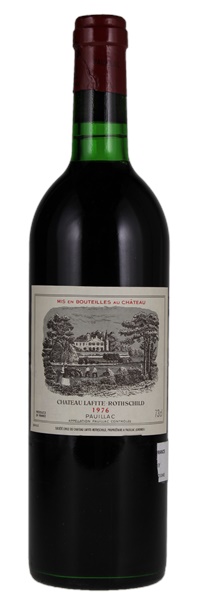
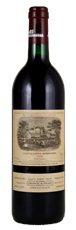
1976 Château Lafite-Rothschild

Not Currently In Auction

Latest Sale Price

December 7, 2025 - $515

Estimate

Have a 1976 Château Lafite-Rothschild to sell?
Get a Free Estimate

RATINGS

96James Suckling

I love the rosewater, currants and citrus character to this now...full body yet so ethereal. It goes on and on in the finish turning creamy and citrusy.

93Robert M. Parker Jr.

...beautiful bouquet of seductive cedarwood, spices, and ripe fruit precedes a very concentrated, darkly colored wine, with great length and texture.

93John Gilman

The nose is pure, refined and nicely tertiary now in its blend of cherries, sweet cigar wrapper, a lovely base of gravelly soil tones, coffee, a touch of currant leaf and a discreet framing of cedary oak. On the palate the wine is fullish, suave and intensely flavored, with lovely focus and grip, melted tannins and a long, complex and very polished finish.

92Vinous / IWC

...the bouquet is open-knit with Montecristos, graphite and dried herbs. The palate is medium-bodied and well balanced...ample detail on the classically styled finish.

17.5Jancis Robinson

...sweet start and then a little dry and short of fruit... The finish was very intriguing and nuanced, however.

****Michael Broadbent

...bouquet mature and totally harmonious; good fruit, good drink yet with keen-edged tannins. Very drinkable.

PRODUCER

Château Lafite-Rothschild

As one of the original four First Growth Bordeaux estates designated by the historic 1855 Bordeaux classification, Château Lafite-Rothschild wines remain some of the world’s most prestigious. One of the château's earliest and most celebrated fans was King Louis XV, who reportedly preferred to buy Château Lafite-Rothschild wine above all other wines. The winery’s reputation remains intact as one of the world’s leading Bordeaux producers. Located in Pauillac, one of Bordeaux’s four famous left bank communes, Château Lafite-Rothschild began gaining a reputation as a great winemaking estate in the 17th century after the vines were first planted on the estate in the late 1670s by Jacques de Ségur. The history of the château is deeply rooted in French winemaking lineage. Jacques de Ségur’s son Alexandre married the heiress of Château Latour and together they had a son, Nicolas-Alexandre de Ségur, linking the histories of both Lafite and Latour from the beginning of each estate’s founding. In the early 18th century, Bordeaux blends were wildly popular in London (known to British wine drinkers as “French clarets,” coining the term Bordeaux-style red wine blends still used today) with the prime minister Robert Walpole drinking a barrel of Lafite every three months. The château survived many significant periods in French history relatively unscathed and was eventually purchased in 1868 by Baron James de Rothschild. The estate has remained in the hands of the Rothschild family ever since. The term “lafite” is derived from “la hite,” or little hill in one of the regional dialects used in France in the Middle Ages. The domaines Baron de Rothschild also include Château Rieussec, Château L’Evangile, Château Duhart-Milon, and others in France and Argentina. Château Lafite-Rothschild includes 247.1 acres of vineyards planted in 70% Cabernet Sauvignon, 25% Merlot, 3% Cabernet Franc, and 2% Petit Verdot. The average age of the vines is 40 years. Annual production is 18,000 to 25,

REGION

France, Bordeaux, Pauillac

Pauillac is Bordeaux’s most famous appellation, thanks to the fact that it is home to three of the region’s fabled first-growth châteaux, Lafite-Rothschild, Mouton-Rothschild and Latour. Perched on the left bank of the Gironde River north of the city of Bordeaux, Pauillac is centered around the commune of Pauillac and includes about 3,000 acres of vineyards. The Bordeaux classification of 1855 named 18 classified growths, including the three above mentioned First Growths. Cabernet Sauvignon is the principal grape grown, followed by Merlot. The soil is mostly sandy gravel mixed with marl and iron. Robert M. Parker Jr. has written that “the textbook Pauillac would tend to have a rich, full-bodied texture, a distinctive bouquet of black currants, licorice and cedary scents, and excellent aging potential.”

VINTAGE

1976 Château Lafite-Rothschild