Intense aromas of blackberries, black licorice and dried flowers. Full-bodied, with silky and fine tannins and a long, rich finish. Polished and well made. One of the best ever from here.
The wine reveals tons of clarity, depth and precision in its violets, blackberries, minerals and French oak, with remarkable balance in between the fruit, acid and tannins.
Musky aromas of earth, underbrush and tobacco, with livelier redcurrant and blueberry aromas emerging with air. The densely textured palate shows more red fruits than black, with complicating hints of cigar box and balsamic vinegar.
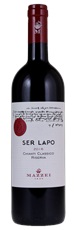
Mazzei has roots that stretch back to 14the century Tuscany, when the Mazzei family of landowners and merchants established agricultural businesses, including winemaking. Today, 24 generations later, the Mazzei family still runs the company which now owns three estates. Along with the original estate in Chianti, Castello di Fonterutoli, the Mazzei family owns Belguardo in Maremma and Zisola in Sicily. In Tuscany Mazzei makes Chianti and Sangiovese blends.
Tuscany, or Toscana in Italian, is Italy’s best-known wine region and its most diverse. Historically Sangiovese was the primary grape grown in Tuscany and Chianti was considered the purest expression of Sangiovese. Sangiovese and its many clones are still important, and they are the grapes used for the Tuscan appellations of Brunello di Montalcino, Vino Nobile di Montepulciano, Morellino di Scansano, Chianti, Chianti Classico and Carmignano. But in the last 50 years innovative producers, many of them in southwestern Tuscany in the area called Maremma, have also planted Cabernet Sauvignon, Merlot, and Cabernet Franc. The tradition defying producers have blended those varietals with Sangiovese to produce dazzling wines that do not conform to Italy’s appellation regulations. Such wines are called Super Tuscans and cannot be labeled with either of Italy’s highest level quality designations, which are in order of status Denominazione di Origine Controllata e Garantia, (DOCG), and Denominazione di Origine Controllata, (DOC). (This has not at all hindered the demand for Super Tuscans, some of which are consistently among the world’s most admired and well-reviewed wines.) Tuscany has six DOCG appellations and thirty-four DOCs. Though famous for its red wines, Tuscany also produces whites made primarily from Trebbiano and Vernaccia.
There are also many Tuscan Indicazione Geographica Tipica (IGT) wines that are often an innovative blend of traditional and non-traditional grapes. This relatively new appellation status was started in 1992 as an attempt to give an official classification to Italy’s many newer blends that do fit the strict requirements of DOC and DOCG classifications. IGT wines may use the name of the region and varietal on their label or in their name.


 Preferred storage and shipping partner of
 Share
Share
 Post
Post
 Tweet
Tweet
 Copy Link




 <
<
 >
> service@winebid.com
 (888) 638-8968