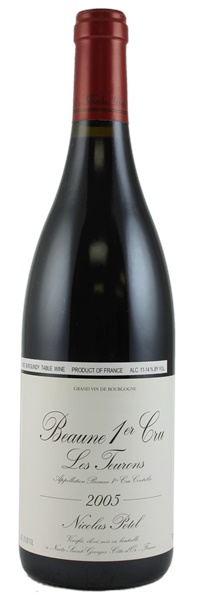
Maison Nicolas Potel is a negociant started in Burgundy in the late 1990s by Nicolas Potel, son of the legendary winemaker Gerard Potel, who founded Domaine de la Pousse d’Or in Volnay. After Gerard’s death in 1997 Nicolas started the negociant business, but a falling out with his business partners in 2009 forced him out of the business that still bears his name. The company is now owned and operated by the brothers Louis and Armand Cottin of Maison Laboure-Roi, a nearly two-hundred year old Burgundy negociant. Nicolas Potel has had no connection with Maison Nicolas Potel since 2009. The Maison offers a large portfolio of Grand Cru, Premier Cru and other Burgundies.
Beaune is the heart, soul and capital of Burgundy. A walled, medieval city of ancient buildings and cobble-stoned streets, Beaune is home to the annual Hospices de Beaune wine auction, a charity auction dating to the 15th century. Beaune has always been a natural crossroads, and it was a commercial center as far back as the Roman era. Today Beaune is home to many of Burgundy’s most famous negociants, including Drouhin, Jadot, Latour and Bouchard Pere et Fils. The Beaune appellation includes 1,620 acres of vineyards, of which 95% are planted to Pinot Noir, with the remainder to Chardonnay. Although there are no Grands Crus, there are 44 Premier Cru vineyards which account for nearly half the appellation’s vineyard acreage. The best vineyards are on the upper slopes around the town, and Beaune is especially known for its “clos,” or small, walled vineyards that are often parcels of larger vineyards. There are also Beaune village wines. Robert M. Parker Jr. wrote that the primary traits of Beaune reds in the best vintages are “an intense bouquet of berry fruit, principally black cherries and strawberries. The wines are rarely massive or large scaled, relying more on their smooth, silky, berry fruitiness and harmony to seduce…”
This red wine is relatively light and can pair with a wide variety of foods. The grape prefers cooler climates and the wine is most often associated with Burgundy, Champagne and the U.S. west coast. Regional differences make it nearly as fickle as it is flexible.

 Preferred storage and shipping partner of
 Share
Share
 Post
Post
 Tweet
Tweet
 Copy Link



 <
<
 >
> service@winebid.com
 (888) 638-8968