Sign In

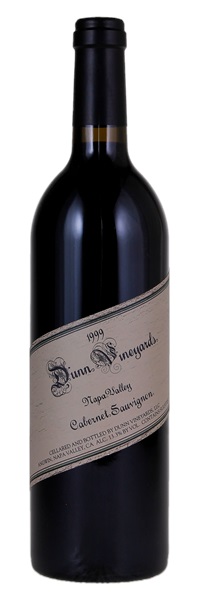
1999 Dunn Cabernet Sauvignon

Light capsule condition issue; light label condition issue

Removed from a subterranean wine cellar; Purchased direct from winery
2 available
Bid *
Ends Sunday, 7pm Pacific

RATINGS

94Vinous / IWC

...gorgeous, with a display of sweet tobacco, green stems and sage which give way to musky red and black currants...gains in depth and complexity with time in the glass, taking on hints of dried flowers, clove and graphite...textures are velvety; yet the feel is quite lifted, with brisk acids creating a mouthwatering feel while ushering in tart raspberry and hints of bitter herbs...finishes elegant and long, tapering off to savory spice and lasting mineral tones.

90Stephen Tanzer

Wild aromas of blackberry, black cherry, espresso, leather, raw meat, tobacco and mint. Juicy, sweet and plump, with intense but rather rustic flavors. Finishes with lingering sweet fruit and surprisingly ripe tannins.

PRODUCER

Dunn

Randy Dunn began making wine while studying oenology at the University of California at Davis, and he never stopped. Dunn worked for years at Caymus and in 1978 he and his wife purchased a vineyard on Howell Mountain in Napa Valley. In 1979 the couple started their winery and released their first Cabernet Sauvignon in 1981. Dunn Vineyards Cabernet Sauvignon Howell Mountain is recognized as one of the most consistent, massive and well-made wines in Napa Valley. The vineyards are in the Howell Mountain district which, at 2,000 feet above sea level, gets more sun and less fog than vineyards on the valley floor. Rich volcanic soil is part of the terroir. Dunn’s vineyards are planted entirely to Cabernet Sauvignon grapes and the oldest vineyard was planted in 1972. Dunn produces 2,000 cases annually of Cabernet Sauvignon Howell Mountain, the flagship wine, and about 2,000 cases of Napa Cabernet Sauvignon.

REGION

United States, California, Napa Valley

Napa Valley AVA is the most famous winemaking region in the United States and one of the most prestigious in the world. With nearly 43,000 acres of vineyards and more than 300 wineries, it is the heart of fine wine production in the United States. Winemaking started in Napa in 1838 when George C. Yount planted grapes and began producing wine commercially. Other winemaking pioneers followed in the late 19th century, including the founders of Charles Krug, Schramsberg, Inglenook and Beaulieu Vineyards. An infestation of phylloxera, an insect that attacks vine roots, and the onset of Prohibition nearly wiped out the nascent Napa wine industry in the early 20th century. But by the late 1950s and early 1960s Robert Mondavi and other visionaries were producing quality wines easily distinguishable from the mass-produced jug wines made in California’s Central Valley. Napa Valley’s AVA was established in 1983, and today there are 16 sub-appellations within the Napa Valley AVA. Many grapes grow well in Napa’s Mediterranean climate, but the region is best known for Cabernet Sauvignon. Chardonnay is also very successfully cultivated, and about 30% of the AVA’s acreage is planted to white grapes, with the majority of those grapes being Chardonnay,

TYPE

Red Wine, Cabernet Sauvignon

One of the most widely grown grape varieties, it can be found in nearly every wine growing region. A cross between Cabernet Franc and Sauvignon Blanc. It’s a hardy vine that produces a full-bodied wine with high tannins and great aging potential.

VINTAGE

1999 Dunn Cabernet Sauvignon

WINEMAKER